Blog

  • Ben and Cheryl Edgecombe

    **Friday 18 May 2007. **

    Ben and I were honoured to be named OFO celebrity birders in 2007. We decided to do our Baillie Birdathon in the Hamilton Study Area, an area we knew well and where we knew we could find a diverse number of birds in the diverse number of habitats that we are fortunate to have here in the 40 km circle based around Dundurn Castle.

    We awoke at 1:50 a.m., keen and excited to start the day. Ben and I along with our awesome team of Rob Dobos, Dave Don and Thomas Crooks embarked on our big day around 2:20 a.m. The temperature hovered at a brisk 1ºC but the winds were calm as we started out at Kerncliffe Park where we easily got Sora and Virginia Rail.

    Our route was planned out by Rob Dobos as we had completed a Hamilton Big Day a couple of years ago with the same routing and it seemed to be the best way of maximizing our species coverage. Of course the day before, a male Kentucky Warbler was found on the Northshore Trails at the RBG Arboretum so there was a little tweaking to the route at the last minute.

    We cruised through Flamborough and were delighted to hear Whip-poor-will calling even though it was chilly. One of the highlights for Ben was in Hyde Tract located on Safari Road just east of Kirkwall Road. A male Scarlet Tanager was perched at the top of an evergreen in the sunlight, brilliant colours of red and black and a lifer for Ben. Many of the birds we saw here were perched high trying to soak up the sun and get some warmth. We should have done the same.

    We covered many areas through the day, Mountsberg Conservation Area, Valens Conservation Area and along Lennon Road (a unique habitat of northern forest giving us species such as Canada, Black-and-white and Nashville Warblers on territory, Winter Wren and White-throated Sparrows singing everywhere). The Beverly Swamp was alive with Northern Waterthrush, Alder Flycatcher and a fly-by of Green Heron. The Dundas Valley, a vast expanse of many habitats was a good place to locate Louisiana Waterthrush but Lou wasn’t singing for us that day so we dipped on this species.

    The afternoon was spent at many of the great migrant traps along the lakeshore. Unfortunately many of the migrant warblers from the day before had cleared out. We were not able to get the Kentucky Warbler but ended up with 21 species of warbler. Shoreacres, Shell Park, Burloak Woods were all combed for migrants and we were able to pick up a number of species here. At Bronte Harbour was a bonus, a lingering Bonaparte’s Gull.

    Perhaps our biggest misses were ducks. You would think that given we live in the wintering duck capital of Canada that you would be able to find at least one of a number of species of ducks and scoters. Resident Red-necked Grebes, many Long-tailed Ducks and Red-breasted Mergansers comprised the majority of our species with a sprinkling of White-winged Scoter, Ruddy Duck, both scaups and a Northern Pintail.

    Later in the afternoon, we hit Fifty Point Conservation Area and Grimsby Sewage Lagoons. Highlights here at Fifty Point included more migrant warblers and Orchard Oriole, probably one of the only places locally to find these birds. Grimsby Sewage Lagoons were quiet since they had just mowed the north cell, scaring most of the remaining waterfowl which were there the day before. Perhaps I should ask the Department of National Defense to sponsor the birds they flushed.

    On to Saltfleet, an area on the escarpment up Fifty Road and west to 10th Road East. Two pairs of Upland Sandpipers, a singing Vesper Sparrow and a calling Ring-necked Pheasant added to our total as the sun went down. Then, a mad dash to Binbrook Conservation Area where a previous scouting trip had found an Osprey on nest. Thank goodness for floodlights.

    Our total ended up at 143 species. Nineteen hours of birding, total exhaustion but total exhilaration. We were very pleased with our outcome. There always are big misses on big days but the fun, the great birds, the many lifers for Ben and most of all great friends made for an excellent Baillie Birdathon.

    Thank you to all the sponsors who supported Ben and me for our birdathon. We truly enjoyed being the celebrities and raising money for the great work that the OFO does. To my best friends, Rob, Dave and Tom, a big thank you for your support, for the laughs, for the birds and most of all for the friendship. We couldn’t have done it without you.Good birding!

    Cheryl & Ben Edgecombe


    Bird List

    alt text

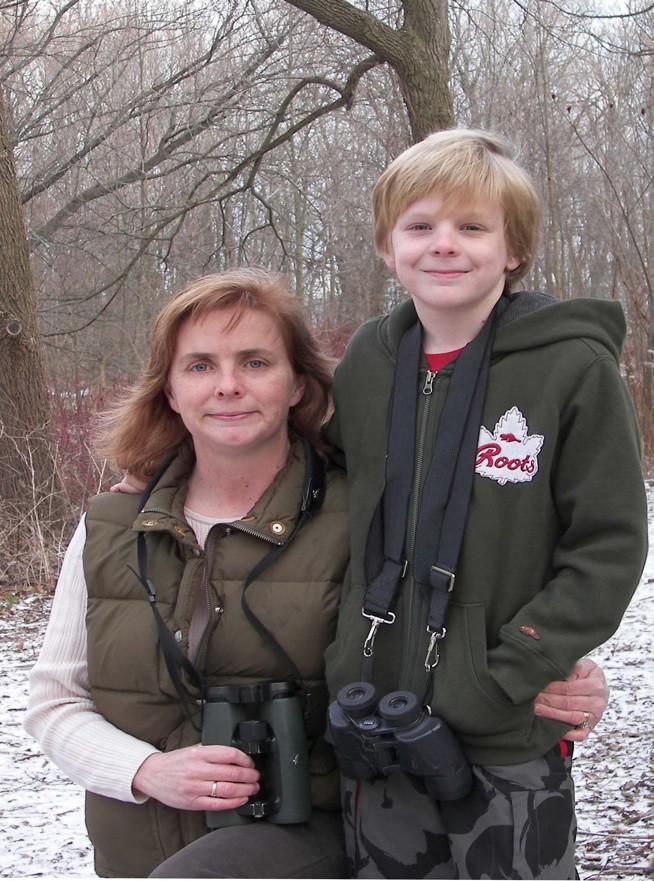
    Celebrity birders Ben and Cheryl Edgecombe.

    alt text

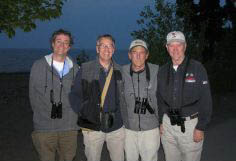
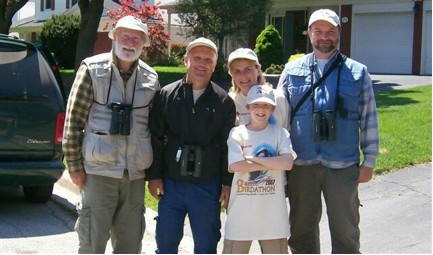
    The birding team: Rob Dobos, Dave Don and Thomas Crooks with Ben and Cheryl.

  • Mike Cadman

    Mike Cadman has been a life-long student of birds. He received his Master of Science degree from the University of Toronto in 1980 based on studies of the American Oystercatcher.

    He is a Songbird Biologist with Ontario Region of the Canadian Wildlife Service. He is best known as the driving force behind the first and now the second Ontario Breeding Bird Atlas, both monumental projects. The new atlas was published in fall 2007.

    Mike Cadman takes a lead role in many important survey programs designed to monitor Ontario’s bird populations including the Forest Bird Monitoring program, 1992 to present. Mike is active on committees and organizations devoted to the conservation of birds and their habitats such as the Society of Canadian Ornithologists and Birds Studies Canada. He was chair of the Eastern Loggerhead Shrike Recovery Team from 1992-1999.

    Mike has been studying birds for over 35 years. He has authored and co-authored many publications in both peer-reviewed and popular publications. Mike has published many articles in Ontario Birds and OFO News.


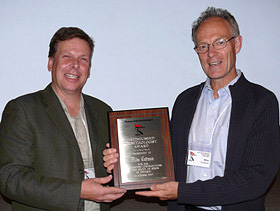
    Mike Cadman (right) receives the 2007 Distinguished Ornithologist Award from Mark Peck at the OFO Annual Convention at Point Pelee on 13 October 2007. Photo: Jean Iron

  • 2007 Certificates

    Gwen and Milton Mowbray

    in recognition of their dedication to nature and especially for protecting wildlife at their pond.

    Mike and Nancy Furber

    for welcoming birders to their property to see the Western Kingbird which was there on 26 and 27 September 2006.

    John Zehethofer

    in recognition of his freely giving his time and expertise to redesign the OFO website look in 2006.

    Essex Regional Conservation Authority

    for recognizing the importance of habitat creation for migrating shorebirds as well as enhancing viewing opportunities for visiting birders at Hillman Marsh.

    Stan Long

    for bringing Reesor Pond to the attention of the birding community in 2006.

    Ron and Lynda Valentine

    for participating in ten years of birdathons for OFO.

    Ron and Lynda Valentine.
    Photo: Jean Iron

    Township of Alfred and Plantagenet,
    Mayor Jean-Yves Lalonde

    for promoting birding in the Alfred area through the creation of the Alfred Birding Trail and particularly the Birding Tower at the Alfred Sewage Lagoon.

    Prescott-Russel Stewardship, Suzanne Lafrance

    for promoting birding in the Alfred area through the creation of the Alfred Birding Trail and particularly the Birding Tower at the Alfred Sewage Lagoon.

    Werner Schmalz, Kindermann Canada Inc.

    in recognition of his long standing support of Ontario Birds and OFO.

    Mike Malone, Pelee Wings Nature Store

    in recognition of his long standing support of Ontario Birds and OFO.

    Mike Malone.
    Photo: Jean Iron

    Paul Grant, Vortex Canada

    in recognition of his long standing support of Ontario Birds and OFO.

    Nikon Canada Inc.

    in recognition of their long standing support of Ontario Birds and OFO.

    George Madsen and Mosaic Esterhazy Holdings

    for providing access to their settling lagoons.

    Cheryl Edgecombe

    for her weekly Hamilton Naturalists Club Birding report on Ontbirds.

    Cheryl Edgecombe.
    Photo: Jean Iron

    Phyllis E.Bray

    for the many years she operated her wonderful bird feeders in Chippewa.

    Keith Lee

    for his kindness in accommodating birders wishing access to the Brighton Wetland.

    Barry Cherriere

    for his hard work in maintaining trails for birders in the Hamilton area.

    Barry Cherriere.
    Photo: Jean Iron

    Kevin Shackleton

    for his help in enabling us to bird the Holland Landing Lagoons.

    Brendan and Kim Toews

    in recognition of their important finding, and of their contribution to the successful nesting, of Piping Plovers at Sauble Beach in 2007.

    Brendan and Kim Loews.
    Photo: Jean Iron

    Cindy Cartwright, Stewart Nut, Peter Siebbert, Kirk Silver, Bruce Birding Club, Friends of Sauble Beach, Sauble Cottagers Association, Municipality of South Bruce Peninsula, Owen Sound Field Naturalists

    in recognition of their contribution to the successful nesting, of Piping Plovers at Sauble Beach in 2007.

    Cindy Cartwright.
    Photo: Jean Iron

    Jeff Robinson, Barbara Sleza of the Canadian Wildlife Service (Environment Canada)

    in recognition of their important contribution to the successful nesting of Piping Plovers at Sauble Beach in 2007.

    Mark Shoreman, Madeline Austen, Kevin Hawthorne,
    Leo Heyens of the Ontario Ministry of Natural Resources

    in recognition of their important contribution to the successful nesting of Piping Plovers at Sauble Beach in 2007.

    Todd Kish of Environment Canada

    in recognition of his important contribution to the successful nesting of Piping Plovers at Sauble Beach in 2007.

    Jack Dingledine of the United States Fish and Wildlife Service

    in recognition of his important contribution to the successful nesting of Piping Plovers at Sauble Beach in 2007.

  • Dave Milsom

    24 May on a clear evening we left Toronto and headed west. Chris Escott was driving. Chester Gryski, Bob Falconer and I were the passengers. All four are members of the OFO Board of Directors.

    Our first of several anxious moments came when we were detoured around Caledonia because of a blockade but we were blessed with a very interesting and eye-opening drive though the vast Six Nations Reserve. None of us had ever been there before–we were most impressed by its size as well as the pride taken in their community by the residents.

    Reaching Long Point at 10 pm, we headed to the sand road running along the northern edge of St. Williams Forestry Station. Bets were placed on our \“first bird\”–Great Horned Owl (2 choices) could not be heard, nor was Barred Owl responding to the tape. The other choice, Whip-poor-will, was the first bird encountered just as we reached a sandy clearing.

    Off to Big Creek Marsh along the Causeway, where we added several good finds as we staggered along in the dark on the uneven trail. Least Bittern called repeatedly. American Coot, Common Moorhen, Canada Goose, Marsh Wren and an unexpected Sedge Wren all sang or called.

    The marsh off Concession A was next. An Eastern Screech-Owl was heard, as was a male Ring-necked Pheasant, Virginia Rail and Sora Rail. Even a Swamp Sparrow sang in the dark. Nearby, we heard Gray Catbird and American Robin vocalizing.

    Further owl attempts near Backus Woods and the Wilson Tract proved fruitless. Dawn mercifully arrived as we stood in the Rowanwood Sanctuary and listened to a cacophony of dawn chorus as the sun rose. I was pleased to be with three such expert birders who were all adept at recognizing each individual song in the midst of so many. I usually need to concentrate very hard to hear just one tune when maybe eight are playing at the same time!

    We were doing well until this unknown tune had us all baffled. Not only that, but the darn singer would not allow itself to be recognized. After “wasting” over five minutes at the best time of the day, we finally caught a glimpse of a Blue-winged Warbler. To infuriate us further, he now began singing his regular song!

    Totally without sleep, I occasionally heard a familiar song, such as that of an American Goldfinch, and my mind was blank for a few seconds. But once the dawn chorus had subsided, we were able to concentrate on individuals much better and our list continued to grow. The Wilson Tract provided us an opportunity to check out the size and ferocity of the 2006 mosquito crop. Well-prepared, we were not unduly hampered in our search through here for rare warblers but the Hooded eluded us. Suddenly Chris whispered, “hear that!” We stopped and the distinctive sound of a Worm-eating Warbler came though the undergrowth. Using his I-pod, Chris brought it within a few feet of us, but typical of this species it did not want to show. We were sure of its identity so continued on.

    Time was going fast by now (almost 7:30am) and we wanted to visit the park and the Old Cut Banding Station early, so we left Walsingham and headed into Long Point Provincial Park. One of my favourite stands of pine and several adjacent clearings deep into the park were visited first. As usual on a good migration day, this area was very productive: several warblers, vireos and flycatchers were seen well. Across the road, two Sandhill Cranes flew over the marsh. An American Bittern called. A quick check of the west beach produced no shorebirds of note, so we sped off to Old Cut. Here Stuart Mackenzie and the team were most helpful. Did we need a Philadelphia Vireo? Yes. And we were quickly directed to the bird. The same for Bay-breasted Warbler and Red-breasted Nuthatch.

    We headed back up the Causeway and stopped to view Big Creek in the daylight. A totally different experience, as we added several new birds not heard at night – Mute Swan (not surprising!), Black Tern, Pied-billed Grebe etc. We dropped Bob at a restaurant to get some breakfast while the three of us ate our snacks and scoped the Bird Studies Canada pond. Good mudflats here resulted in Short-billed Dowitcher, sandpipers, plovers and Dunlin being seen. Returning to pick up Bob, we learned he had been waiting outside five minutes watching a Downy Woodpecker. No big deal, I thought, we’ll get one later. We never did!

    Another fine wet spot was at the bridge on Concession 1, where Lesser Yellowlegs and a few ducks were added. Then to Backus Woods for another mosquito encounter. They weren’t too bad, but the trail was disappointing. No Yellow-bellied Sapsucker or Pileated Woodpecker as I’d had a few days earlier with my British group. We heard Cerulean Warbler, Scarlet Tanager, saw a Blackburnian Warbler well, but no Yellow-throated Vireo. On return to the van, Chris drove in on the other side of the big pond. We were quickly rewarded when a male Prothonotary Warbler sang in full view. We heard an Acadian Flycatcher sing once nearby, but were so intent on calling in the Vireo that we forgot about it until the end of the count. Several attempts at Yellow-throated Vireo only brought in more Red-eyed Vireos, so we finally departed for ¼ Line East.

    The single male Prairie Warbler sang from the exact same tree as I’d seen it three days earlier. We then drove behind the trout pond at the St. Williams Forestry Station. We searched here for boreal species, but could not find Winter Wren or Brown Creeper. However, a Blue-headed Vireo was a good find. Even better was a male Hooded Warbler, then a surprising second Worm-eating Warbler singing in the undergrowth.

    We were doing quite satisfactorily but I was frequently nodding off for two-minute naps as Chris drove from one location to another.

    We now decided to search for species not yet found but definitely attainable if we went to the right place. For example, we needed Cliff Swallow so we drove to the bridge in Port Royal and immediately found one. The Yellow-breasted Chat I’d found while relieving myself a few days earlier could not be relocated but we always found something new when we visited such good sites.

    The afternoon was coming to an end when we decided to journey through Turkey Point to Normandale and Fishers Glen. Frequent stops at the fish hatchery, feeders, beach and marina were generally unproductive and time was becoming an enemy!

    On such a birding big-day, you have to be prepared to alter your plan when you examine the time remaining vis-à-vis the species still missing. It was about 6:30 pm when I suggested we go straight to Townsend Lagoons and then drive to Hamilton for the last 30 minutes or so of daylight.

    This plan proved very worthwhile. At Townsend, we immediately scoped across the first lagoon a Red-necked Phalarope. Sanding next to it was a Curlew Sandpiper! We knew this bird had been at Townsend but consensus was that it had departed several days earlier. We added a couple of ducks and even a late Tundra Swan here too.

    At 7:30 pm we drove off for Hamilton. It was risky but we decided to go via Caledonia along Highway 6. Fortunately, we were not held up and arrived on Eastport with over 40 minutes of daylight left. Double-crested Cormorant, Caspian Tern, Black-crowned Night-Heron and Gadwall were quickly added. The Peregrine Falcon was at the lift bridge, Lesser Scaup swam in Windermere. At 9 pm we stood on the Lake Ontario shoreline at Van Wagners Beach. Only Mallards and Cormorants were flying by. It seemed to be over. I asked a passer-by to take a photo of our weary but contented band. He obliged. We were examining the picture when Chris suddenly called out, “Black-bellied Plover flying towards the beach.” We stopped in amazement as a single plover dropped onto the beach directly in front of us. I started laughing at our good fortune so hard that the bird flew off again almost immediately. But it was a great way to end what had been a memorable day!

    Our total of 156 species was not a record, although it tied the second highest total for OFO in the past decade, but it exceeded by six our hoped-for number.

    We worked very well as a team and never argued despite our lack of sleep Chris was a stalwart. He drove throughout and his expertise was invaluable. Chester and Bob were both brilliant too. Their skills and sharp eyes contributed greatly to our final total.

    Many, many thanks to all those who so kindly sponsored me on this 2006 Baillie Birdathon. I hope you will all agree from this report that it was worth it.It certainly was much fun to participate in such a worthwhile cause.


    Bird List

    alt text

    Dave Milsom.

    alt text

    Chester Gryski, Bob Falconer, Dave Milsom and Chris Escott.

  • Ken Abraham

    Ken Abraham is respected worldwide for his knowledge of waterbirds, particularly Canada Geese, Cackling Geese, Brant, Snow Geese, Black Scoters and Marbled Godwits. He is the Ontario government’s representative on international committees overseeing the management and conservation of waterfowl and shorebirds.

    Ken obtained his doctorate in 1980 from Queen’s University on the Ecology and Evolutionary Biology of the Snow Goose in northern Manitoba. This led to a job as District Biologist with the Ministry of Natural Resources (MNR) at Moosonee. Ken was responsible for an immense area of the Hudson Bay Lowland and northern coast. He is currently Waterfowl and Wetlands Research Scientist at the Ministry’s office at Trent University in Peterborough. Every summer Ken returns to the Hudson Bay Lowland to lead MNR’s studies of waterfowl, shorebirds, wetlands and climate change.

    Ken is a great resource to OFO, authoring several articles in Ontario Birds and OFO News. His most popular article of international interest is “Cackling Goose, not new to Ontario” in the February 2005 issue of OFO News 23(1):2-6 and on the OFO website here. Ken has published over 60 papers in peer-reviewed journals such as the Auk, Condor and Wilson Bulletin.


    Ken Abraham (right) receiving the 2006 Distinguished Ornithologist Award from past president Jean Iron at the OFO Annual Convention in Ottawa on 30 September 2006. Photo: Ron Pittaway

  • 2006 Certificates

    William “Bill” McNair

    for making his farm available for the Eastern Loggerhead Shrike Recovery Program near Dyers Bay on the Bruce Peninsula and for working with Lee Redford and Rina, from the University of Guelph, to look after the 20 cages on the farm.

    Linda Henebury

    for bringing the Yellow-headed Blackbird (among other interesting birds) to the attention of the birding community and for gracefully and enthusiastically allowing people to visit her property near Embrun. January-February 2006.

    Gord and Carol Duff

    of Deep River, for enthusiastically welcoming many birders into their home for the chance of an excellent view of a male Varied Thrush, which was first noticed on 11 January 2006 feeding on cracked corn. They patiently waited with everyone until the bird

    Robert Bossu and the Cornelis family

    for creating a wetland on Robert’s property north of Wallaceburg that has been an attraction for hundreds of shorebirds and other birds and wildlife, including a Snowy Egret on 26 May 2006. They also hosted a Ruff from 29 April to 2 May 2006.

  • George and Mark Peck

    Preamble:

    It was one of those offers too good to refuse. When Chris Escott, President of the Ontario Field Ornithologists, first approached us to see if we would be interested in being the OFO Celebrity Birders for 2005 we were a little concerned that we possessed the proper qualifications required. Although we had both been involved in ornithology for most of our lives we had always been interested in the nesting and breeding of Ontario birds rather than the equally challenging, but quite different, listing of birds. Many of the birders we knew were better qualified and more experienced in the challenges that we knew would lay ahead in a “birdathon”. However, after talking to Chris and thinking about the fun we could have, we decided to accept the challenge. We had to, there were too many reasons in favour!

    The James L. Baillie Memorial Fund for Bird Research and Preservation, established in 1976, is a project of Bird Studies Canada. Founded in 1960, Bird Studies Canada is the nation’s leading bird conservation organization with more than 20,000 active members, volunteers, and supporters from across the country.

    Back in 1965 Jim Baillie, an Assistant Curator in the Ornithology Department of the Royal Ontario Museum (ROM) had asked my father, George, to become the Coordinator of the Ontario Nest Records Scheme. Forty years later, now a Research Associate at the ROM, Dad was still looking after the Scheme and is more passionate now than ever before. In 1974, I was introduced to my first formal education into birds at the Young Ornithologist Workshop down at Long Point hosted by David Hussell and Erica Dunn. For the last 20 years I have been a technician in Ornithology at the ROM, where the ghost of Jim Baillie and all of his contributions to Ontario ornithology remain as strong as ever.

    The birding community continues to grow and Bird Studies Canada and the Ontario Field Ornithologists are now two of the major organizations responsible for the research and promotion of bird study in the Province. They have always been strong supporters of both the Ontario Nest Records Scheme and the Ontario Breeding Bird Atlas and we have always valued the contributions and knowledge of their members. The opportunity to assist both organizations through the Baillie Birdathon was something we were now quite excited about.

    We settled on 15 May 2005 as the chosen day. It was the only day that really fit into our schedule and we were keeping our fingers crossed for good weather and lots of birds. It was our first birdathon and to ensure success we decided to enlist the aid of some “ringers”. The rules are pretty loose for the birdathon and we planned to take full advantage of the situation. We both agreed that in order for a species to count both of us had to see the species in question. For the most part we stuck to the rule! We also asked if we could include, as part of our challenge, confirmation of breeding. This was in honour of the last year of the Ontario Breeding Bird Atlas in which OFO and BSC were playing such a large role in coordinating. We attempted to photographically document all confirmations of breeding. Knowing our deficiencies, we asked Glenn Coady and Gerry Binsfeld, two of the best “ears” in Ontario birding circles that we knew, to act as our “pointmen and drivers”. Another reason we chose 15 May was because our advanced scouting had been quite limited. So, we picked the day after a scheduled ROM birding trip to Long Point that Glenn and I had committed to earlier.

    Our birdathon day would be pretty straight forward. Spend the night in the Long Point area, start birding as early as we could drag our butts out of bed, and work our way back to Toronto, stopping at strategic birding spots along the way and finishing at the Leslie Street Spit in Toronto near dark. Our goal; 150 species and 40 confirmations of breeding.

    The Baillie Birdathon: The day before.

    14 May 2005 – Sunny, cool, light wind, and advance scouting (nothing in the rules against this). Gerry and Glenn joined Dad and me in Oakville and we worked our way down to Long Point with the ROM Birding Course group, stopping at locations we were planning to use the next day. Most of the time was spent in the Long Point area at Old Cut looking for migrants. The ROM course finished around 1800 and it had been a good day. 123 species without even going for broke! Stupidity was being saved for the next day! We spent our last couple of hours visiting a few more potential sites and talking to BSC staff for additional suggestions. A special thanks to John Brett, Stu Mackenzie, Dawn Laing, Ron and Anne Marie Ridout, David Hussell and Erica Dunn for their helpful suggestions. We spent the night at the Kinda Cute Bed and Breakfast in Port Rowan. Wake up call 3:00 a.m.

    The Baillie Birdathon: The day.

    15 May 2005 – Partly cloudy, cool, medium winds. There is nothing “kinda cute” about a 3:00 a.m. wake up call! Fortunately the day began with potential because the owner of the B & B was already up and had breakfast and coffee ready to go. We began at the Big Creek Marshes at 4:00 a.m. listening for marsh birds. Our first bird was a sleep deprived, testosterone-filled Swamp Sparrow singing only to himself, as far as we could determine! There was no way he was going to get a mate if he carried on like that everyday. Although we were hoping for a couple of rail species, and were not against using playback to get them, we came up empty.

    By 4:45 a.m. we were back on the road heading to the Wilson Tract to pick up the woodland predawn chorus. A pair of Whip-poor-wills spotted along the roadside helped to renew our confidence. The predawn chorus in the woods was a good idea; having Glenn and Gerry as pointmen was even better! Birding by ear is a talent not easily mastered. Apparently, there is a certain genetic trait in the Peck family that does not allow for easy identification of Ruffed Grouse drumming from a distance greater than 20 m! To be honest there may even be a few more species that fall into the same category. A gentle push, a few paces in the right direction by our “drivers” and, problem solved! Wild Turkeys were busy gobbling all around us and a Cape May Warbler singing above the car on our exit was a great bonus. No breeding confirmation yet, not really surprising considering we were still having trouble even seeing a bird!

    An hour later we were headed back to Old Cut where we planned to spend the next couple of hours looking for migrants. Along the way we stopped off and checked under a couple of bridges to pick up nesting Eastern Phoebe and Cliff Swallow and, at BSC headquarters, confirm breeding of Tree Swallow, Barn Swallow, and American Robin. We had actually found several of the nests the day before and luckily the birds had decided to leave them in the same place overnight!

    Old Cut Station turned out to be a great location. Although not in large numbers, the diversity of bird species was impressive and our list quickly improved. A Yellow-breasted Chat, Carolina Wren and a White-eyed Vireo were helpful additions to many northern species migrating through the area. Our strategy for Old Cut was simple and involved electronics. Small frs radios were used and enabled us to cover the area well within easy contact of our “drivers” should the need arise. Our goal was to avoid the all too common phrase of birders; “you should have been here five minutes ago, the bird just left, honest”!

    After exhausting our luck at Old Cut we stopped briefly at ¼ Line Road for Prairie Warbler without success but picked up a couple of new species at Backus Woods. We then left the Long Point area and headed east towards Hamilton. We were able to confirm breeding of Bald Eagle, Eastern Screech-Owl and Great Horned Owl along the way but were unsuccessful with the Osprey that had nested several years ago in Caledonia. During our route back Gerry had been traveling ahead of us and, with the help of John Lamey, called to let us know we should probably visit the Townsend Sewage lagoons. Normally we would have no use for a cell phone but, in cases of an emergency they do serve a purpose. We were about an hour behind our schedule at this point, a clear emergency if ever there was one. Townsend’s was huge for us. Waterfowl and shorebirds, two groups sadly lacking from our list, were found in excellent diversity and in a short time period. Wilson’s and Red-necked Phalaropes were both in the lagoons swimming close to a White-rumped and Semipalmated Sandpiper. There is still no place like a sewage lagoon when you think you are *&%# out of luck.

    Moving on to Hamilton Harbour we quickly improved our confirmation of breeding species count with Herring Gull, Ring-billed Gull and Double-crested Cormorant. They may not be pretty to some but they were all very beautiful to us. We then moved into Oakville and grabbed a Red-necked Grebe and some other species from my home turf. We even had time to confirm breeding of Northern Mockingbird, thanks to a suggestion from an ex BSC staffer and regular Ontario Birds contributor, not to mention “mockingbird crazy”, Roy Smith. We also had a short detour to pick up a bike. We were running late and time was not on our side!

    As we sped down the QEW heading for Toronto trying to beat the rain and the night I couldn’t help but wonder if OFO would be willing to pick up any speeding tickets should we happen to cross the line into illegality. Gerry, once again leading the way, phoned to suggest we might want to visit Colonel Samuel Smith Park and Humber Bay Park. The results, a late Common Loon, Common Goldeneye, and Hooded Merganser. We also stopped in at High Park and grabbed nesting evidence for Blue-gray Gnatcatcher and Black-capped Chickadee.

    Our final push was for the Leslie Street Spit. It was dusk, there was a gentle rain and the thought of a 5 km hike up the Spit was not very appealing; hence the bike. Although tired, Dad and I were both willing to give it a go and, while the idea of “doubling” on the bike crossed my mind, I watched Dad head off, a little uneasily, into the night on my niece’s 21 speed mountain bike. Not quite the pretty picture that you would see in the movies! We traded halfway up the Spit and then played a little loosely with the rules! At the end of the Spit we knew there was a Great Egret sitting on a nest. The only question was; were we both going to see it? For arguments sake let’s just say we did and let’s also say that the American Black Duck that Glenn and Dad saw while I was off on a bike ride was also seen by both of us!

    It was a pleasant walk back to the parking lot, aided by a lift from Richard Joos, President of the Toronto Bird Observatory. A great day; 155 species and 34 breeding confirmations. With a little bit of help from some good friends and all of the generous individuals who contributed to the Baillie Birdathon we had been able to help two very valuable organizations, and had our best Ontario big day ever. (MKP)

    P.S. Dad slept for the next two days!! (GKP)


    Bird list
    alt text

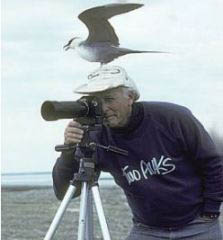
    George with Long-tailed Jaeger, Nunavut. Photo: Jim Richards
    alt text

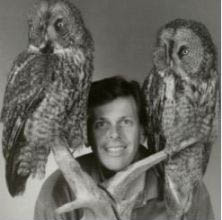
    Mark with Great Gray Owls. Photo: Brian Boyle, ROM
    alt text

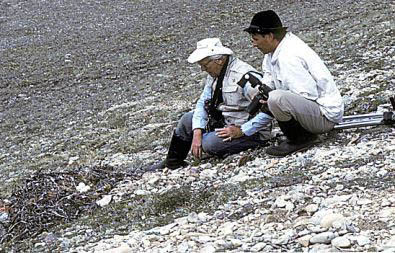
    George and Mark in Nunavut, 1990, examining a Rough-legged Hawk nest with eggs in it. Photo: Jim Richards
  • Ron Pittaway

    Ron Pittaway’s passion for birds began during the 1950s in Ottawa, where his mentor was the late Earl Godfrey, then Curator of Ornithology at the National Museum. Godfrey influenced Ron’s interest in identification, taxonomy, subspecies, morphs, molts and plumages.

    Ron is a founding life member of OFO, a co-editor of Ontario Birds from 1991 to 2006, and technical editor of OFO News from 1994 to 2007. He has authored over 130 articles on birds. He was a member of the Ontario Bird Records Committee for 12 years between 1984 and 2003, including three years as Chair and one as Secretary.

    Ron strongly promotes conservation, having served five years as the Ontario government’s representative on the Loggerhead Shrike National Recovery Team. His Birding Guide to Carden Alvar here, plays an important role in public awareness of the alvar.

    Ron brings an extraordinary breadth of knowledge to his articles and posts to Ontbirds and ID-Frontiers. He inspired many people to take up birding during 10 seasons as a park naturalist in Algonquin Park and 23 years teaching conservation and resource management science at the Leslie M. Frost Natural Resources Centre near Minden.


    Ron Pittaway (right) receiving the 2005 Distinguished Ornithologist Award from Bob Curry at the OFO Annual Convention at Point Pelee on 10 September 2005. Photo: Jean Iron

  • 2005 Certificates

    Gloria Braithwaite

    for hosting the large numbers of visitors who came to see the Varied Thrush that visited her feeder in the winter of 2005.

    Allen Chartier

    for the identification work he did to confirm the identity of the Rufous Hummingbird in Niagara Falls in the autumn of 2004 and his prompt and thorough reporting of his findings through ONTBIRDS.

    Mark Cranford

    for his hard work and diplomacy in maintaining ONTBIRDS as one of the premier listservs.

    Department of National Defence

    for their continued cooperation with birders to provide access to shorebird viewing at Shirleys Bay.

    Michel Gosselin of the Canadian Museum of Nature

    to acknowledge fifteen years of assistance to the editors of Ontario Birds and OFO news.

    Janice and Art Haines

    for their unfailing hospitality to the hundreds of birders who visited their home in Niagara Falls to see the Rufous Hummingbird in the autumn of 2004.

    Karl Jennewein

    for his constancy in stocking the bird feeders on the paths from Halls Road to Cranberry Marsh.

    Doug Lockrey

    for his assiduous reporting of Great Gray Owls in the Halls Road area during the irruption of winter 2005.

    Joanne Reive

    for hosting visitors on her property at Eagle so they could view the Pyrrhuloxia on her neighbour’s feeder around Christmas 2004.

    Diane and Kayo Roy

    for their assiduous reporting of the Rufous Hummingbird in Niagara Falls in the autumn of 2004.

    John & Carol Somerset

    for their reporting of a Gray-crowned Rosy-Finch that visited their bird feeder in Chelmsford in January and February 2005 and for their hospitality to visiting birders.

    Martha Sova

    for hosting the large numbers of visitors who came to see the Harris’s Sparrow that visited her feeder in the winter of 2005.

    Walter Wojek

    for maintaining the feeder that attracted the Pyrrhuloxia to his home in Eagle at Chrismas 2004.

  • Jim Rising

    Jim Rising is an OFO member best known for his research and contributions to our knowledge of the taxonomy and identification of North American birds.

    As professor of ornithology at the University of Toronto, Jim taught courses in field ornithology, evolutionary theory, freshwater and marine biology and subarctic ornithology. Many of his former students are prominent scientists.

    Jim wrote 10 species accounts in the first Atlas of the Breeding Birds of Ontario. He co-authored six species accounts in The Birds of North America and wrote two chapters in the Sibley Guide to Bird Life and Behavior.

    Jim is a member of the American Ornithologists’ Union (AOU) and is the only Canadian on its Committee of Classification and Nomenclature. This committee decides the names and taxonomic order of North American birds.

    Jim is an authority on sparrows and Baltimore and Bullock’s Orioles. He has published over 62 peer-reviewed papers, contributed chapters in 20 books, and written several popular articles about birds. His identification guides to the sparrows, co-authored with David Beadle, are recognized for their thorough treatment. Jim regularly writes articles for OFO News, providing insights into changes to the AOU Check-list.


    Jim Rising (right) receiving the Distinguished Ornithologist Award from Jean Iron and Bruce Falls at the OFO Annual Convention in Oakville on 2 October 2004. Photo: Ron Pittaway