Blog

  • 2023 Peterborough Convention Description and Trips

    Save the date!!

    September 22nd – 24th, 2023

    Update – Registration is now closed!

    – Should you have a question contact: Sue Suess (ssuess@rogers.com)

    Thank you to all Registrants!

    OFO Convention – Peterborough

    Peterborough Convention Registration – Now Closed!

    OFO Convention Northeast Edition – Timmins

    Timmins Convention Registration – Now Closed!

  • Enabled Birding

    Help make birding for EveryBody!

    Ontario Field Ornithologists and Birds Canada, with the help of Toronto Ornithological Club, and have teamed up to create an interactive map featuring the accessibility details of nine great Ontario birding sites.

    Click here for more detail and the latest update. 

  • OFO’s Rare Bird Ambassadors

    OFO’s Rare Bird Ambassadors


    OFO’s Rare Bird Ambassador plan is about empowering Ontario birders with the tools and resources needed so that they can coordinate with property owners to ensure the best outcomes for all parties.

    When a rare bird appears on private property or public property where access and/or crowd control may become an issue, careful planning is required to ensure that the owner/host/property manager, birders, photographers and the bird all have a positive experience.

    The goal is to promote positive relations between landowners, birders, and photographers, ultimately resulting in happy people and happy birds. Birders can still decide if they want to share sightings or not; we just hope that this makes the decision easier and spreads out the workload related to managing rare bird observations.

    Find out more about this exciting program at: Finding Birds / Rare Bird Ambassadors

    What to do if you have found a rare bird? Instructions for landowners and birders

    Want to be a Rare Bird Ambassador? You don’t have to belong to OFO.

    Find out more about being a Rare Bird Ambassador

    Register to be a Rare Bird Ambassador

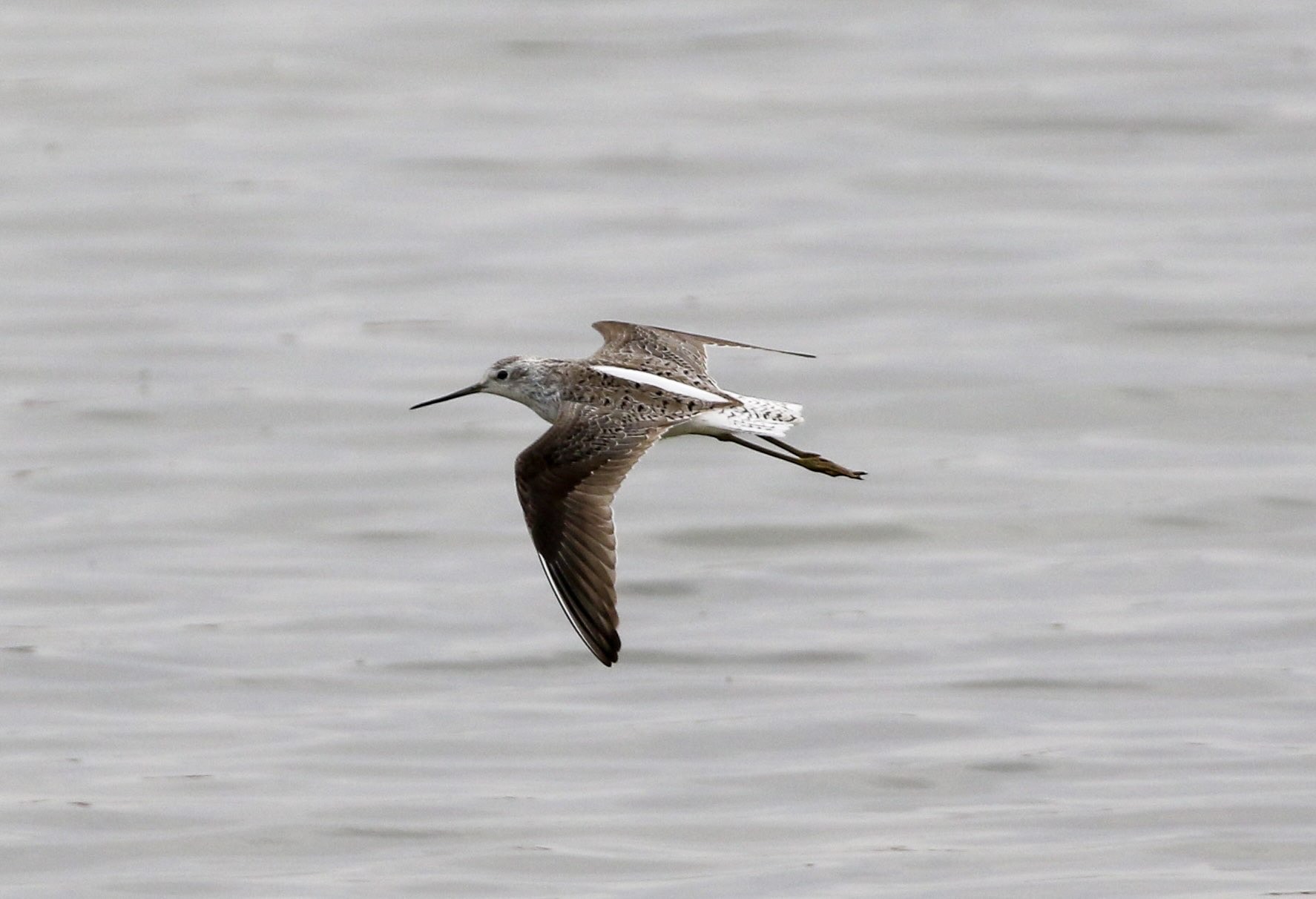
    Photo Credit: Marsh Sandpiper by Matt Parsons

  • Annual General Meeting

    As a charitable organization, OFO holds an Annual General Meeting (AGM) to report to members on the state of the club.

    Information provided to members includes the financial reports, and reports from the board on the club’s activities in the past year. At the AGM. members review, then vote to approve the minutes from the previous year’s AGM, the financial reports, the board reports, and nominations for the Board.

    Questions, Comments, or Nominations for the Board of Directors

    If you have any questions, comments, would like to submit a nomination for OFO’s Board of Directors, or volunteer, please send to email Jeff Skevington, OFO President at: president@ofo.ca.

    2025 Annual General Meeting, Sarnia, Ontario

    OFO’s 2025 Convention and AGM will take place in Sarnia, Ontario on September 19-21, 2025.

    We invite you to read the AGM materials package (here) that includes the President’s Message; Financial Report; reports from Directors and Committees; and Awards for 2024-25.

    The President’s AGM Presentation

    2024 Annual General Meeting, Leamington, Ontario

    OFO’s 2024 Convention and AGM will take place in Leamington, Ontario on September 27-29, 2024.

    We invite you to read the AGM materials package (here) that includes the President’s Message; Information about the proposed new By-law; Financial Report; reports from Directors and Committees; and Awards for 2023-24.

    The President’s AGM Presentation

  • Bruce Di Labio

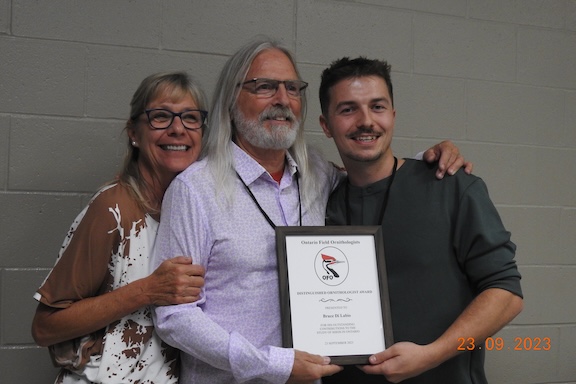
    In 1997, OFO’s first distinguished ornithologist was the legendary Earl Godfrey. It was stated that his “enthusiastic encouragement of young birders launched the careers of many natural science specialists throughout Canada.” Bruce Di Labio, the recipient of the 2023 OFO Distinguished Ornithologist Award personifies such a lifelong contribution to bird study.

    Like many, Bruce’s passion for birds began early on. In 1965, at the tender age of seven, he hand-tamed a Black-capped Chickadee (Poecile atricapillus) at his family cottage at Constance Bay. For the nearly six decades since, bird study has been a driving force in Bruce’s life. His contributions to our knowledge of birdlife in Ontario and Canada have been enormous over this entire period. Over thousands of days in the field, his passion and commitment to learning and sharing has never waned.

    Bruce cut his teeth on birding during his teen years in the Ottawa valley. He was one of about a dozen slightly rabid youths collectively known as “the bike gang.” In the fall of 1971, this group also included Bruce Mactavish, Stephen O’Donnell, Tom Hince, Jim Harris, Brian Garvin, Tom Plath and Mike Bentley. To clarify, the bike gang used bicycles and were not motor-or electric-powered in any way. This moniker was first somewhat respectfully applied by Peter Whelan, the national birding columnist for The Globe and Mail. Over the years, it grew to become a badge of honour and skill.

    When Bruce first came onto the bike gang scene, he was dubbed “question man.” This label acknowledged his immense driving thirst for learning — something which has never changed despite many years in the field. Growing up in this intensely competitive group, Bruce soon became one of their leaders. Throughout most of his teen years, he and the other bike gang members were out in the field for over a hundred days a year, and often from dawn to dusk. Being young, driven, and with keen eyes and ears, many members of this group soon matched, and then surpassed, much of the adult community in both experience and skill level. While some adults were dismissive and miffed, others, such as Earl Godfrey, Ron Pittaway, Monty Brigham and Richard Poulin, encouraged and celebrated this development.

    A varied career

    Bruce used his travel experience and knowledge to focus on birding in the Ottawa valley. As he grew up, he became a major player in the regional community. At the age of 17, he led his first bird hike for the Ottawa Field Naturalists’ Club (OFNC). His contributions grew throughout his twenties. He frequently led field trips, gave talks, organized and compiled Christmas Bird Counts (CBCs) and other regional censuses, and wrote numerous articles in publications of the Ottawa Field Naturalists. Speaking of CBCs, Bruce has participated in the Ottawa-Gatineau CBC for 52 consecutive years and is the founder and compiler of the Dunrobin CBC (now running for 42 years). In 1983, the OFNC acknowledged his important contributions to the knowledge of regional birdlife and natural history as the recipient of the Anne Hanes Award. In 1996, the OFNC awarded him an Honorary Lifetime membership for significant contributions to Canadian natural history.

    Bruce managed to turn his immense knowledge into a varied and productive professional career — and all with birds. In the late 1970s, he began working for Dr. Henri Ouellet and Dr. Earl Godfrey at the Canadian Museum of Nature (formerly National Museum of Canada), as an ornithological technician. In addition to fieldwork, he specialized in specimen preparation and collecting, and he contributed significantly to the museum’s avian reference collection.

    Next was a position at the Canadian Nature Federation, where he spent several years as their staff naturalist. This made Bruce realize that his real calling was to instill his passion for birds in others.

    With the confidence and experience gained from these positions, Bruce soon moved on to the private sector. Here he combined environmental consulting and field work with a career as a professional birding and nature guide. Bruce’s talent for birding and affable nature made his success in guiding inevitable. He worked relentlessly for his charges and was always patient and nurturing. This resulted in an incredibly faithful clientele who wanted to bird with Bruce — wherever or whenever.

    His field skill was sought out by several of the continent’s biggest tour companies, and he soon became a regular local guide on several rosters. Bruce though, had bigger ideas. He loved to travel and soon began adventuring and guiding outside eastern Ontario. Initially, he led adventures to sites like Prince Edward Point, Point Pelee National Park and Moosonee/Shipsands Island. Inspired by this success, it wasn’t long before he was guiding across Canada. Frequent destinations included Saskatchewan, the Alberta Rockies, the Yukon, Newfoundland and Churchill. In Churchill, Bruce fell in love with this dynamic northern site and coined it “the Pelee of the north.” Over the years, he has guided more than 20 groups there, and recorded more species than any other birder.

    But the world beckoned. As his guiding business grew, he organized and led trips across the globe. Sites he visited multiple times included Australia, the Bahamas, Costa Rica, the Dominican Republic, Ecuador, Jamaica and South Africa. Cuba, which soon became his favourite island, was the site of over 20 trips. Through all these trips, Bruce gained a reputation as a highly skilled leader who was patient, organized and professional. Most of all, he was passionate about birds and nature wherever he travelled — and a heck of a lot of fun to spend time with.

    After more than forty years of professional bird guiding, Bruce finally retired in 2021.

    Community

    For many people in eastern Ontario, Bruce has always been the face of birding. If there was something going on in the bird world, the Ottawa media would soon be calling Bruce for facts, quotes, or a full-blown article or feature. He made birding look cool and inviting and no doubt encouraged a huge number of people to join our group. He never forgot those who took the time to help him along the way. He was always willing to speak to a school group, lead a hike, or take some time to answer the endless questions that come with being an expert birder.

    He took photos — lots of photos — and not just of birds. As we’ve aged, those non-bird images have become remarkable touchstones of the shared journey we’ve taken. Without them, our aging minds might wonder if those stories were real or imagined.

    A driving member of OFO

    Bruce has contributed enormously to the growth of OFO through leading hikes and organizing field trips for members, promoting membership in OFO, speaking at OFO conferences (including being the keynote speaker), and writing numerous articles, notes and site guides in Ontario Birds and OFO News. In addition, Bruce was a voting member of the Ontario Bird Records Committee for three years. And of course, there was also the enormous number of rare birds he found and shared!

    Eastern Ontario — more than Ottawa

    In the 1970s, Ottawa had an emerging and dynamic birding community. It included professional ornithologists like Earl Godfrey, visionary birders like Ron Pittaway and Monty Brigham, and emerging talented youths like Bruce. In the rest of Ontario, Ottawa was essentially the beginning and end of eastern Ontario. Bruce would soon change that view.

    Many of our previous distinguished ornithologists have shown the way in documenting new frontiers for birding in the province. Beginning in the late seventies, Bruce would put the rest of eastern Ontario on the map. His greatest discovery was the legendary Cornwall-Massena dam. Documenting the birding at this site soon became his obsession. Year after year, he chalked up a dizzying array of rarities, high counts and other notable finds. How many old-time Ontario listers have roared down the 401 to search for another amazing rarity found by Bruce? No one ever hesitated. If he called it, it was gold.

    To put it in perspective, over two decades, Bruce found three species of alcids, including Ontario’s first Long-billed Murrelet (Brachyramphus perdix), and one of the few gettable Atlantic Puffins (Fratercula arctica) and both Northern Gannets (Morus bassanus) and Northern Fulmars (Fulmarus glacialis) at this one site alone.

    Publications

    In his early years, Bruce needed a nudge to put pen to paper, but with the support and encouragement of his wife Laurie, he soon became a prolific writer. Over the decades, he has authored dozens of articles in Ontario Birds, OFO News, Ontario Birding News, Birders Journal, Nature Canada, Trail and Landscape, The Canadian Field Naturalist and The Blue Jay. Topics ranged from hybridization in goldeneyes to the first record of Little Egret (Egretta garzetta) in Ontario to site guides for the Cornwall Dam and Chaffey’s Locks. In addition, he wrote an enormous number of popular articles, contributing for four years as a weekly birding columnist for The Ottawa Citizen.

    Going Big

    Bruce has always loved a challenge. As you would expect, he holds virtually all the top ten Big Year records for the Ottawa region, but he also loves Big Days. There is no doubt that Big Days are the ultimate test of a birder’s skill and knowledge. At this, Bruce has always excelled. He captained the Bushnell Nighthawks to victory in five out of eight Taverner Cup competitions in eastern Ontario. His unmatched knowledge of eastern Ontario bird distribution was a huge asset.

    In 1990, he joined friends Paul Pratt and Tom Hince on the Kowa Optics birding team in the World Series of Birding in New Jersey. They soon became the feared “Canadians” and dominated the event for nine years, winning the overall competition three times (Urner Stone Cup), and earning the top-ranking out-of-state team eight times (Edwin I. Stearns Award). In their ninth and final year, they geared back and won both the Cape Island Cup and the Local Geographic Area Award just for good measure.

    Before easing back from Big Days, Bruce and the Canadians entered and won the Great Texas Classic (a five-day long birding marathon). The next year, they returned to Texas and broke the long-standing North American and U.S. Big Day record (they are still the only international team to hold either record). In summary, Bruce has held the North American, U.S., Texas, and New Jersey Big Day records — an amazing feat!

    In recent years, he has slowed little and on four separate occasions has been an OFO Celebrity Birder for the annual Great Canadian Birdathon (once partnered with son Benjamin and three times reunited with Paul and Tom).

    Bruce’s Legacy – Mentorship

    Bruce has never forgotten his roots, or those who took the time to nurture his love for birds. He has always been a patient and encouraging mentor, instilling that passion in many others. There are numerous testaments to his mentorship, but two come to mind.

    The first involves Jeremy Bensette who established a new Ontario Big Year record in 2017. Jeremy gave Bruce credit for not only finding several outstanding rarities that got him over the top, but for his ongoing encouragement throughout the year. If you know Bruce well, none of this is a surprise.

    A second story involves Bruce’s son Benjamin (Ben). Over the last fifteen years, Bruce and Ben have become a regular sight where birders gather — especially Point Pelee in spring. Ben has become a highly talented field observer who can more than hold his own when toe to toe with Dad. Indeed, how many among us would have readily identified Ontario’s first Little Egret? Ben did. And Bruce gave him full credit.

    They say that life is a circle. In the end, what we accomplish is more than us. It is the people we encourage, influence and help to succeed. I see the photo in 1997 of Bruce presenting Earl Godfrey with the very first OFO Distinguished Ornithologist Award. I know Dr. Godfrey would be thrilled to see that young man’s decades of contributions recognized here. Congratulations Bruce!

    Tom Hince
    Bruce receiving OFO’s 2023 Distinguished Ornithologist Award from his wife Laurie and son Ben in Peterborough, 23 September 2023. Photo: Barbara Bowman

  • Welcome to OFO’s Celebrity Birders for 2023!

    Rowan Keunen, Max Segler, Piper Smith and Liam Thorne will be participating in the 2023 Birds Canada Birdathon to raise funds for OFO’s Young Birders Program and to support bird research and conservation through Birds Canada.

    The OFO Big Day Birdathon will be taking place this year on May 22. Our celebrity young birders have decided to do a county Big Day and have chosen Norfolk as the county to do it in. It will be an all-out, 24-hour rush to find as many species as possible.

    We hope you will consider supporting the OFO Celebrity Birds in 2023!

    Participation in the Birdathon is a fun and worthwhile way to participate in real life bird conservation efforts. All money raised for OFO will support the Young Birders program. Many thanks to our supporters.

    Two ways to donate! Tax receipts will be issued for amounts over $20:


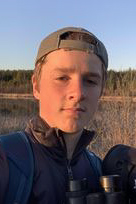
    Rowan Keunen is a 17 year old birder from Flamborough. He spends most of his time birding at his local patches and is currently working hard to build up his Ontario list. Morning flight and lake watches are some of his favourite kinds of birding. In the summer, he also enjoys searching for leps and odes. A dream Ontario bird for Rowan is Willow Ptarmigan, and a target of his for the OFO Big Day is Acadian Flycatcher. He is looking forward to participating in the fundraiser this year!

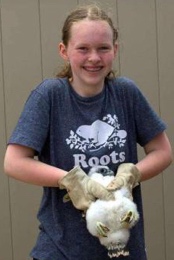
    Piper Smith is currently a grade 10 student in Kitchener, Ontario. When the pandemic hit, she began to spend lots of time walking trails and taking an interest in birds and photography. It quickly became a serious passion, and soon she was researching species, reading guidebooks, and beginning her life list. She has gone to one OFO outing: the Canada Jay Weekend in April of 2022. Her favourite bird is the Barn Owl and her favourite lifer is the Marsh Sandpiper. Piper also actively participates in her local Peregrine Falcon Fledge Watch group.

    Max Segler is a 17 year old birder from Toronto. He has attended the OFO Young Birder Camp twice as well as numerous other OFO programs such as the annual convention. While he will go birding wherever he can, some of his favourite places are Point Pelee, Long Point and Cochrane district in NE Ontario. His favourite group of birds are falcons and gulls. He also enjoys canoeing and is excited to be going on his first Atlas trip this summer!

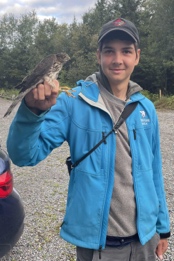
    Liam Thorne is a 14 year old birder from Hamilton. Liam has been interested in birds since he was a toddler, and now enjoys birding throughout Ontario and is an avid county lister. He has been involved in banding programs from a young age and attended the OFO Young Birder Camp last summer where he had a fantastic experience. Liam doesn’t have a favourite bird, but he particularly likes warblers and shorebirds. He also enjoys Atlassing and is excited for another great season.

  • 2022 Certificates

    Barry Kent MacKay, nominated by Lynne Freeman and Jim Richards for an Award of Special Merit

    For his dedication and tireless amount of work he devotes to the welfare of birds and other wildlife. This award also recognizes Barry’s continuous support of OFO through the generous donation of striking and original artwork for the covers of Ontario Birds and other deeds.

    Anthony Glenesk, nominated by Ken MacDonald

    For finding and sharing rare birds at his favourite patch, Lawson Line, in Simcoe County.

    Dan Strickland, nominated by Jim Richards

    For the research and determined work that led to the name change of Gray Jay back to Canada Jay.

    Tim Haan, nominated by Mike Burrell

    For creating a web-based tool that shows the weekly and cumulative summaries of the Winter Birding Challenge.

    Karl Konze, nominated by Jack Alvo

    For discovering, identifying and facilitating viewing of a first winter Golden-crowned Sparrow at the allotment gardens next to Rosetta McClain Gardens in Toronto, Ontario.

    Mayor of Lambton Shores, Bill Weber, and his staff, nominated by Jeff Skevington

    For allowing birders to access Thedford Lagoons to view a Marsh Sandpiper in Lambton County.

    Georg Hentsch, nominated by Susan Nagy

    For his hospitality in allowing birders to access his yard to view a Golden-crowned Sparrow in Waterloo, Ontario.

    John Challis, nominated by Dave Milsom

    For allowing birders to freely access his Washago, Ontario yard in winter of 2022 to view a long-staying Townsend’s Solitaire.

    Noam Markus and Clyde E. Robinson, nominated by Gis Siegler

    For facilitating the removal of the frisbee golf course at West Woodbine Beach in Toronto, Ontario to protect a seasonally flooded Dune and Meadow Habitat.

    Mike Cadman, nominated by Lynne Freeman

    For the successful stewardship of the first three Ontario Breeding Bird Atlases.

    Sonya Richmond and Sean Morton, nominated by Angie Williams

    For their leadership and dedication to promote bird conservation and ornithological research through their #Hike4Birds across the Trans Canada Trail.

  • Erica Nol

    Introduction

    I presented the Ontario Field Ornithologists’ (OFO) 2022 Distinguished Ornithologist Award (DOA) to Dr. Erica Nol at the Annual General Meeting of the OFO in Leamington on 24 September 2022. I have known Erica for over two decades, during which time I worked, volunteered and completed two graduate degrees under her supervision. I can safely claim that Erica is one of the most enthusiastic, dedicated and passionate ambassadors of wildlife conservation and sustainable living in Ontario and beyond. She has had an extremely productive career, with numerous important on-the-ground and scholarly contributions to bird conservation. These impressive accomplishments alone are worthy of the OFO’s DOA, but the contribution I believe distinguishes Erica the most is what she has done above and beyond these pursuits. In particular, I refer to the manner in which she has thoughtfully trained and mentored legions of highly-skilled students who have continued on to distinguished careers in bird conservation, mostly in Ontario. I also note the especially strong and unique role model she has portrayed to them (and me) in doing so. It was, therefore, a great pleasure for me to present OFO’s DOA to Erica.

    In the beginning

    Erica’s life path was especially dynamic early on. She was born in the Netherlands in the 1950s when the country was recovering from the Second World War. Like many other Dutch at the time, her parents immigrated to Canada. In the first few years, Erica’s father finished his medical residency at St. Joseph’s Health Centre in Toronto. Next, the family of five moved to St. Thomas briefly and then settled in Uxbridge, where Erica’s dad served as a general practitioner. Later, Erica’s father went into psychiatry and they moved to Michigan. As a result, she completed her BSc at the University of Michigan. While there, she worked in the university’s Museum of Zoology, where she met her husband Chris Risley, who had worked with the late David Hussell and Erica (or Ricky) Dunn. Chris had just graduated with his BSc, working in the museum as a Curatorial Assistant, and David and Ricky were just starting out in their careers at Long Point Bird Observatory (LPBO), now part of Birds Canada. Later, all three would come to play important roles in Erica’s professional path, as well as become long-time, dedicated OFO members. But Ann Arbor proved too urban for Erica’s liking, so she spent a year of her undergraduate degree studying at Humboldt State University in rural, picturesque Arcata, California.

    Erica’s ornithological career was hatched during these diverse early years. A series of experiences during this period very likely fueled her keen interest in birds generally and the major groups of birds and their habitats that she and her students would later focus on in their research.

    The hook is set: on to academia

    With her passion for bird research strengthening, Erica followed her undergraduate degree with an MSc at the University of Guelph, Ontario, supervised by Ron Brooks. Her decision to do so was heavily influenced by Chris, Ricky and David, whose passion for bird research was infectious. Initially, her project was to be on grassland birds, but Erica’s growing interest in shorebirds, especially plovers, was too great, and she made a career-changing decision by switching to factors affecting the nest success of Killdeers on Long Point.

    The next major turn in Erica’s professional path simply fell before her. She wanted to carry on with a PhD researching shorebirds, but she also wanted to be close to Long Point, Chris and the Hussells, who were increasingly important mentors. It just so happened that Chris’ parents had a house in coastal Virginia and Allan Baker and his students at the University of Toronto were studying American Oystercatchers (Haematopus palliatus) close by! One of these students happened to be none other than Mike Cadman, who most OFO members will be familiar with, given his role as coordinator for Ontario Breeding Bird Atlases 1 to 3. Erica completed her PhD studying the reproductive strategies of American Oystercatchers while living at the house and divided the rest of her time between Toronto and Long Point: a lucky and conveniently happy arrangement for everyone.

    Another chance event sparked the next major turn in Erica’s path. She knew she wanted to obtain a postdoctoral fellowship, and she had applied to various positions, but none had inspired her. She happened to attend a talk by Jamie Smith from the University of British Columbia and was struck by his kind ways and the nature of his research and teaching. So, she completed her postdoc with him working on Song Sparrows (Melospiza melodia) and, of course, shorebirds. Erica’s thoughtful teaching and mentoring style was no doubt inspired in large part by Jamie. It was, therefore, an extreme pleasure for me to nominate Erica for the Society of Canadian Ornithologist’s (SCO) Jamie Smith Memorial Award for Mentoring, which she graciously received in 2011.

    Between graduate degrees, Erica also did contract work for the Canadian Wildlife Service on gulls and terns nesting on the Leslie Street Spit at Toronto and on the distribution of foraging seabirds in the Bay of Fundy, New Brunswick. With a firm academic footing in hand and a growing portfolio of scientific publications, Erica was now in a good position to secure something more permanent.

    Anchored in one place: productivity soars

    Shortly after completing her postdoc, Erica obtained employment at Trent University in Peterborough, Ontario, where she has happily remained for decades as an Assistant, then as an Associate and, ultimately, as a Full Professor, along with multiple appointments as Biology Department Chair and Director of the Watershed Ecosystems Graduate Program, which later became the Environmental and Life Sciences Graduate Program. It is from this vantage point at Trent that she really dug in and began delivering her legacy of contributions to ornithology and bird conservation in Ontario and elsewhere.

    Erica’s academic accomplishments are impressive. She has attracted nearly 3.5 million dollars in research grants and has published over 150 peer-reviewed publications. She has taught countless undergraduate students through courses such as Introductory Biology, Ecology, Ornithology (20+ years) and her popular Research Design and Data Analysis (30+ years). She has also taught numerous field courses including Ecology of the Kawarthas, in Ontario, Coastal Field Ornithology, in Virginia and the Ecology of the Galapagos Islands. She has mentored over 70 graduate students, sometimes over a dozen simultaneously. Over half of her graduate students have gone on to professional careers in wildlife science in Ontario, almost all of them in ornithology.

    Notably, at least 12 have gone on to work for the Ontario Ministry of Natural Resources and Forestry, five for Birds Canada at Long Point, three for Canadian Wildlife Service and Environment and Climate Change Canada, three for Ontario Conservation Authorities and three for environmental consultants in Ontario. The collective influence that these numerous, well-trained individuals have had on bird conservation in Ontario and beyond is remarkable.

    I once asked Erica, “How many grad students have you got now?” She replied, “Oh, I’ve really cut back, I’m down to single digits.” I continued, “So how many is that?” In all seriousness and without a hint of irony, she looked me in the eye and said, “nine.” Nonetheless, Erica always seems to provide the support and mentorship that each of her many students requires by throwing simply herculean effort to the cause.

    The majority of Erica’s and her students’ research has been on forest-breeding birds (24% of her peer-reviewed publications) and arctic-breeding shorebirds (47%). The rest of her and her students’ research (29%) has involved a diverse set of topics, such as factors influencing the reproductive success of threatened Bobolinks (Dolichonyx oryzivorus) breeding in hayfields, effects of hyperabundant arctic-breeding geese on sympatric species, drivers of habitat quality in at-risk swallows and monitoring and conservation of secretive marsh birds.

    With a strong start in forest bird research, Erica and her students turned to other timely questions of interest. Much of this involved measuring the response of forest bird abundance, diversity and reproductive success to different silvicultural techniques. Some of the work focused on the influence of harvest on specific species. Erica and her students also measured the effects of logging on insects) and the cavity-nesting bird community. And they looked at habitat selection, the influence of roads and trails and incidental take of nests in harvested and unharvested conifer plantations. This large body of silvicultural research led to improved forestry regulations, numerous best management practices and more sustainable harvests.

    While Erica’s forest bird research was blossoming she was also becoming a world authority on shorebirds. Soon after starting at Trent University, she initiated a long-term research program on the behavioural ecology of Semipalmated Plovers (Charadrius semipalmatus) breeding at Churchill, Manitoba. She also continued studying the ecology of American Oystercatchers breeding along the Atlantic coast of the US, which was the focus of her PhD research. Later, Erica’s shorebird research expanded to many other species and locations including Akimiski Island, Nunavut; Mackenzie River delta, Northwest Territories; state of Georgia; Cuba; Argentina and Venezuela. This large body of shorebird research later became critical for measuring the impacts of climate change on shorebirds and has been especially important for identifying where and when shorebirds are most vulnerable throughout the annual cycle: on the breeding grounds or at migratory staging or overwintering sites. The research has led to action groups (e.g., American Oystercatcher Working Group), conservation plans and on-the-ground efforts to protect key sites, all of which are vital for conserving populations of these species, some of which are rapidly declining.

    There is ample additional evidence of Erica’s scholarly successes. She has served as a peer reviewer for over 35 different journals, often reviewing up to 20 articles per year. She has been a subject editor for Avian Conservation and Ecology and Ornithological Applications, formerly The Condor. She is or has been President of the SCO and the Waterbird Society, an elected Fellow and Councilor of the American Ornithological Society (AOS) and co-Chair of the AOS’s Ad Hoc Committee on English Bird Names.

    Erica has also received numerous academic awards including: Trent University’s Merit Award for Research and/or Service (which she has received in nine different years: 1992–2021), SCO’s Doris Huestis Speirs Award for outstanding lifetime contributions in Canadian ornithology (2015), Trent University’s Distinguished Research Award for outstanding achievements in research and scholarship (2019) and AOS’s Loye and Alden Miller Research Award for lifetime achievement in ornithological research (2020).

    Casting long and far: on-the-ground contributions

    There is no doubt that Erica has had a very productive academic career, although this is only part of the full story. She has been involved in a number of initiatives that go above and beyond her academic pursuits. For instance, she has contributed to Trent University’s Annual United Way Campaign, Peterborough Sustainable Development Committee and the Large Woodlands Conservation Cooperative. She has been heavily involved with assisting Syrian and Afghan refugees to get comfortably settled in Peterborough. She has also led a banding program for Northern Saw-whet Owls (Aegolius acadicus) at Trent University’s James McLean Oliver Ecological Centre on Pigeon Lake north of Peterborough for 25 years. The program has captured and released ~2000 owls and has en­hanced the practical skills of over 100 young ornithologists, three of whom have used the dataset for their honours thesis and one of whom published their results in Ontario Birds (Henry et al. 2015). With so many contributions to worthy causes, it is hard to imagine how Erica could fit anything else into her busy schedule. Although you can rest assured that if she can fit more, she will.

    The motherly role

    With such a long list of her own professional accomplishments, you would think that Erica might be the most demanding supervisor of all in terms of what she expects from her students. In fact, she is one of the most thoughtful and understanding academic advisors anywhere.

    She definitely expects her students to work hard and to show good progress, but she is also a strong advocate of a healthy work-life balance. She very much appreciates that there is much more to life than your thesis or getting a publication submitted. She also has a remarkable ability to provide unfailing confidence and encouragement despite the challenges. No issue is insurmountable. It seems students always leave Erica’s office feeling better about everything than when they entered. And it is not just help and advice with research that is open to discussion. Just about anything can be brought to the table. It is quite possible to go into Erica’s office and get questions answered about data analysis, for example, but also come out with advice on how to improve your relationship with your partner, for instance. In fact, I can honestly claim that I have discussed things with Erica that I have only ever discussed with my own mother. Erica is quite literally an all-purpose supervisor: a true friend and a student’s mother away from home, so-to-speak. I suspect that many of Erica’s students have had a much more positive experience in graduate school due to her thoughtful guidance and mentoring.

    Leading by example

    Erica’s thoughtful mentoring is only one of the ways by which she positively influences others. She also teaches by example, by doing what she advocates. During my time at Trent University, Erica was one of the few professors, for instance, who regularly and consistently rode the bus or her bike to school, or went out of her way to carpool, to reduce carbon and mitigate climate change. There were other professors who did this too, of course, but Erica got noticed the most due to her dedicated regularity, and because of this, many graduate and undergraduate students were inspired to copy her lead. She would also proudly display and discuss her worm composting unit in her lab, as a means of diverting waste from the garbage stream to save energy. One of Erica’s former graduate students, Anne Corkery (Corkery 2013, Corkery et al. 2019), sums up Erica’s leadership in this manner quite nicely: “One of the most inspiring things about Erica, is that the way she lives her life is truly reflective of what she teaches. She cares deeply about the people and the natural world around her and will openly discuss these matters with those she meets. I always stand to learn something new from her, and I can truly say that knowing Erica has played a significant role in shaping me into the person I am today.”

    Concluding thoughts

    Prior to Erica, OFO’s DOA had been granted 22 times to 23 recipients. Only three (13%) of the previous recipients have been women. Ricky Dunn was the first in 2010, who received the award along with her now late husband David Hussell, presented to them by none other than Erica herself. Then Jean Iron in 2016 and Margaret Bain in 2019. Erica is, therefore, the fourth woman to receive the award. I have had the great pleasure of knowing and/or being closely mentored by all four of these accomplished individuals, and I am quite pleased, as I am sure you will be too, that Erica now joins them along with the many other worthy recipients.

    It should now be very clear that Erica has made outstanding and authoritative contributions to the scientific study of birds in Ontario and beyond, that she has been a resource to the Ontario birding community, and that her research on birds has resulted in much new ornithological knowledge. All of these major accomplishments are, of course, worthy of the award. As we have seen, however, it is what Erica has accomplished above and beyond these professional accomplishments that I believe distinguishes her the most. Especially the manner in which she has thoughtfully trained and mentored legions of highly-skilled students and the strong and unique role model she has portrayed to them in doing so. And even more impressive, Erica, along with her husband Chris, somehow found time during all of this to raise three wonderful daughters!

    Congratulations, Erica, as recipient of OFO’s 2022 DOA, and thank you for going above and beyond with your many important and meaningful contributions to ornithology and bird conservation in Ontario and elsewhere.

    Doug Tozer


    Erica receiving OFO’s 2022 Distinguished Ornithologist Award from Doug Tozer.Photo: Ben Taylor

  • 2021 Certificates

    Brian Jeffery, nominated by Jeff Skevington

    For welcoming birders to view a Lark Sparrow at his feeder in Ashton, ON from December 30th, 2020 until April 21st, 2021.

    Carmelle and William Hagen, nominated by Jeff Skevington

    For hosting birders to view a Rock Wren from January 23rd to March 13th, 2021 near Alexandria, ON.

    Jeff Skevington, nominated by Michael Tate

    For his exceptional efforts in coordinating the viewing of a Lark Sparrow at Ashton, ON and a Rock Wren near Alexandria, ON during the winter of 2020/2021.

    Colleen Reilly, nominated by Angelique Mori

    For creating and organizing the ‘Pipits’ birding group in the Hamilton, ON, and sharing her passion and knowledge of birds via field trips and other organized events.

    Discord Team (Barbara Charlton, Brett Fried, David Pryor, and Erica Hentsch), nominated by Lynne Freeman

    In appreciation for providing Ontario Birders with an open and free service for sharing bird sightings and helping others with bird identification and many other questions.

    Ecojustice, nominated by Jim Richards

    In appreciation of all the great work they do to protect our environment and for bird conservation.

    Environmental Defence, nominated by Jim Richards

    In appreciation of all the great work they do to protect our environment and for bird conservation.

    Joel Wittnebel, nominated by Jim Richards

    For his work as editor/writer of ‘The Pointer’, a Brampton-Mississauga based on-line newspaper which continues to thoroughly research and write in depth articles dealing with major environmental issues, including on migratory birds.

    Marcie Jacklin and the Community Voices of Fort Erie, nominated by Lynne Freeman

    In honour of their dedication to saving Waverly Woods in Fort Erie.

    Ontario Eastern Bluebird Society, nominated by Lynne Freeman

    In appreciation of their generous support for young birders and tireless stewardship of Eastern Bluebirds in Ontario.

    Ontario Nature, nominated by Lynne Freeman

    In honour of their intensive work to protect bird habitat.

    Pat Cassidy and Pam Miner, nominated by Jeff Skevington

    For welcoming visitors to view a Boreal Chickadee on their property in the Ottawa area from December 1st 2020 to March 9th 2021.

    Rayfield Pye, nominated by Glenn Coady

    For many years of dedication to the Cranberry Marsh Raptor Watch. He has been a counter at the watch for 31 fall seasons, welcoming countless new observers to the pleasures of hawk watching.

    Ron Pittaway, nominated by Jim Richards

    In appreciation for researching and preparing winter finch forecasts for Ontario and Ontario birders for the past 21 years, as well as countless other deeds performed for OFO over many years.

    Ryan Monkman and the team at FieldBird Cider, when prompted by local birder Kathy Felkar, nominated by Lynne Freeman

    In appreciation for creating habitat for Eastern Meadowlark and other threatened grassland birds, and for demonstrating leadership in bird conservation.

  • 2020 Certificates

    Brendon Samuels and Dr. Leanne Grieves

    In appreciation for taking action to save the Bank Swallow Colony in London, ON.

    Brian Morin

    For providing on Ontbirds timely, informative and educational information about Snow Geese migration in eastern Ontario.

    Bark Lake Leadership and Conference Centre

    In appreciation for allowing birders free access to view the Varied Thrush all winter of 2019-2020.

    Schomberg Village Council, Staff and Residents

    In appreciation for facilitating ethical viewing of Logito, the Dufferin Marsh Northern Hawk Owl at by many grateful birders and photographers during the winter of 2019-2020.

    Dufferin Marsh Nature Connection

    In appreciation for facilitating ethical viewing of Logito, the Dufferin Marsh Northern Hawk Owl during the winter of 2019-2020.

    Glenn Coady

    For helping many grateful Ontario birders view the mega-rarity Hermit Warbler in the spring of 2019.

    Feminist Bird Club, Toronto Chapter

    In appreciation for organizing a birding fundraiser for racial justice to raise awareness and collect $28,312.82 in funds for the Black Legal Action Centre.

    Jeff Skevington

    For promoting and helping to implement OFO’s Birding at Home Challenge.

    Mike Burrell

    For promoting and helping to implement OFO’s Birding at Home Challenge.

    Ivor Williams

    In appreciation for his continuing IT support for OFO; the re-design of OFO’s web-site; preparation of electronic versions of our publications, OFO News and Ontario Birds, including past issues; and helping with the set-up of the Birding at Home Challenge under very tight timelines.

    Norm Murr

    For many years of promoting Toronto Islands as a birding hotspot through his trip reports, which include migration updates and logistical information, plus the comprehensive guide he has written which is available on the OFO website.

    Dennis and Gwen Lewington

    In recognition of their 35 years of maintaining and monitoring an Eastern Bluebird trail in the Bruce Peninsula, with the aim of helping to increase the population of Ontario Eastern Bluebirds.